End-of-line: conveyor line for full cases
Interested in this production line?
End-of-line: conveyor line for full cases
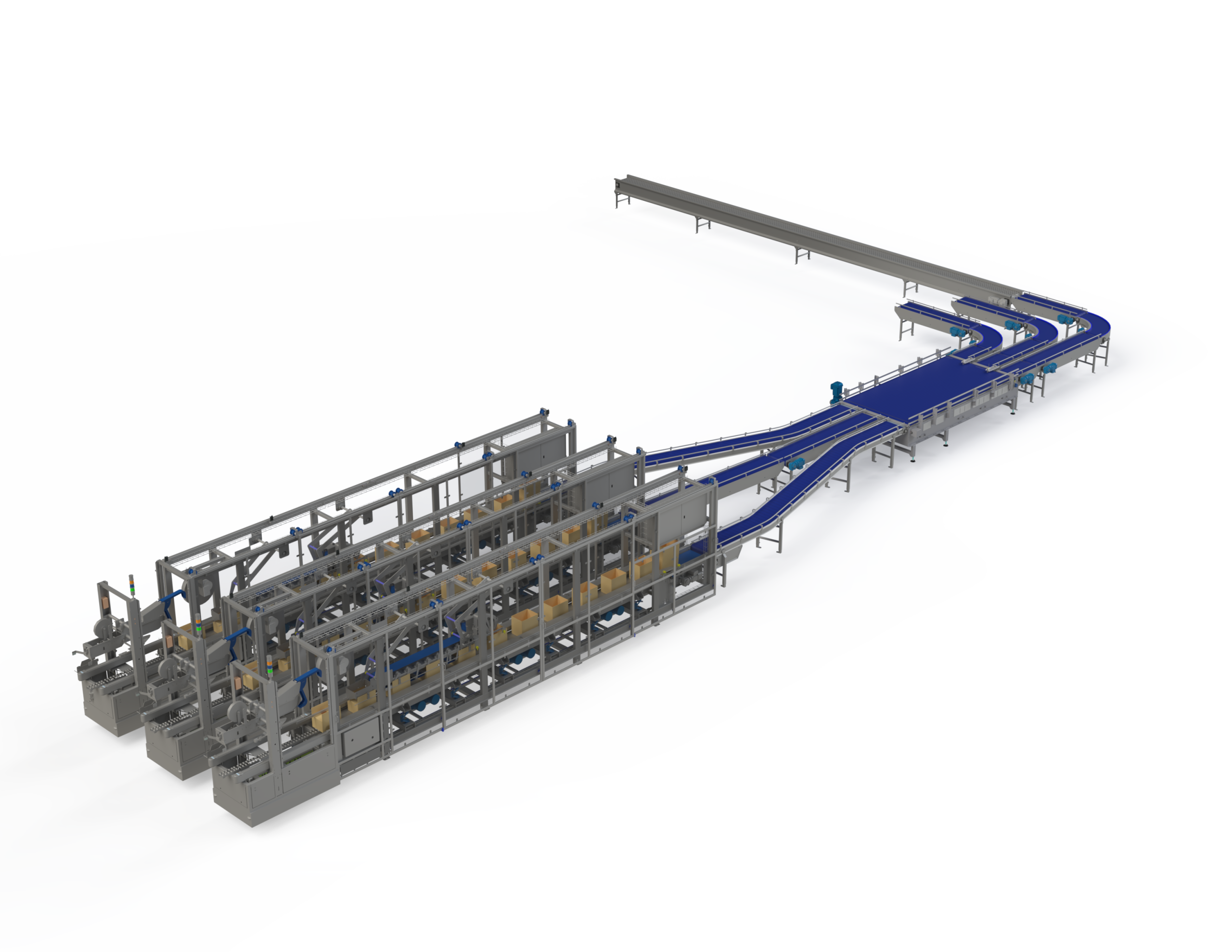
Three parallel case compactors (third-party) where the filled cases enter the conveyor line.
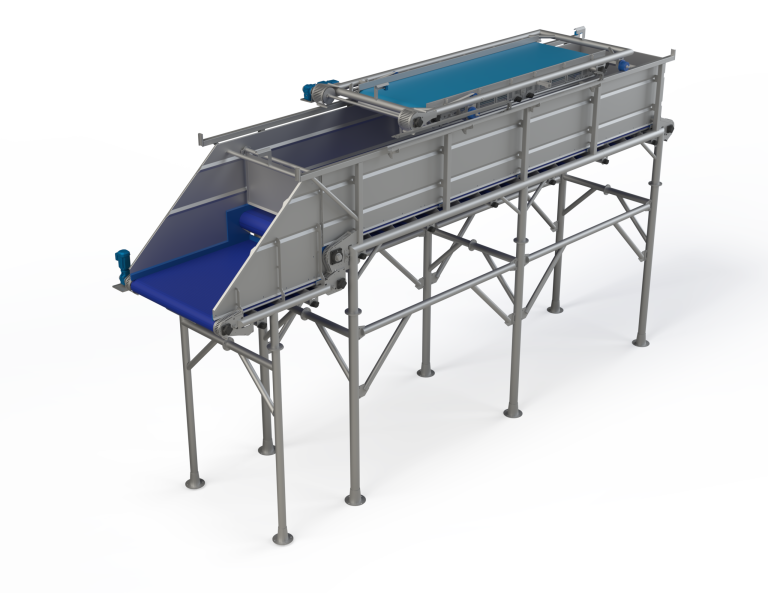
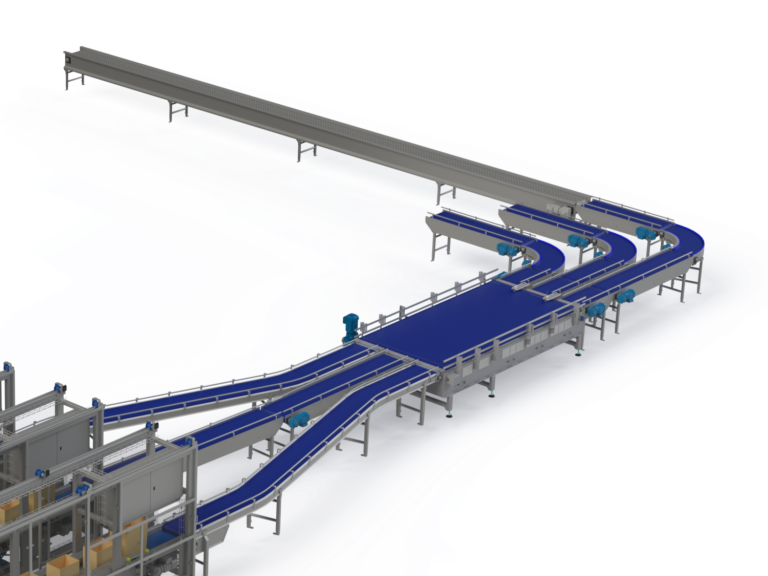
Activated Roller Belt switch that merges the case flows from the three sealers and distributes them over the discharge lanes.
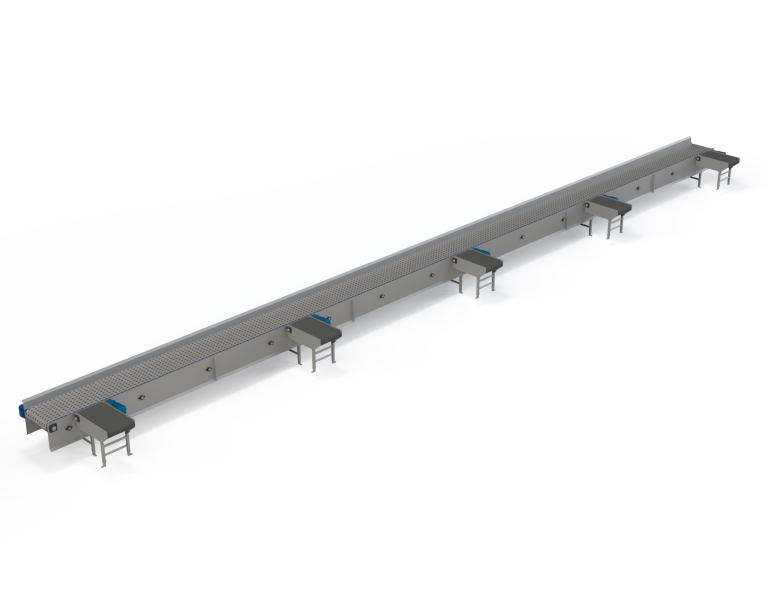
Series of curve conveyors that guide the merged case flow towards palletising.
Buffer lanes where cases accumulate temporarily, so a short stop further down does not stop the line.
Interested in this production line?
End-of-line: merging, buffering and discharging case flows
At the end of the packing line, the full cases from several case sealers come together. An end-of-line conveyor line merges those flows, buffers where needed and carries the cases to palletising in a controlled way.
The line is built from curve conveyors, an ARB switch and accumulation lanes, so a short stop further down does not halt production.
ARB switch: merging and distributing cases without stops
The Intralox Activated Roller Belt switch merges the case flows from the case compactors and distributes them over the discharge lanes. Cases are moved sideways without impact or rotation, keeping their orientation.
- High capacity in a compact footprint
- Gentle handling: no damage to packaging
Curve conveyors: changing position without losing orientation
Curve conveyors guide the cases through the layout of the hall without changing their position or orientation. The line fits the available space and the cases always arrive correctly aligned at palletising.
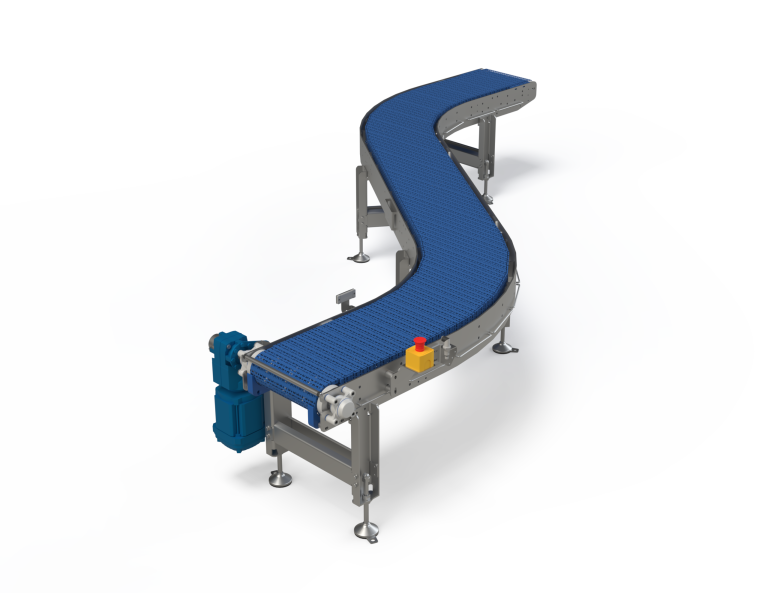
Accumulation lanes: absorbing short stops
Cases accumulate temporarily on the accumulation lanes. If palletising stops briefly, the packing line simply keeps running. Overall line availability stays high and small disruptions are not passed on to the rest of the process.